Selling value, not price: how local retailers can compete with low-cost imports
By Jama Dafac · October 2026
When a cheaper product sits in the shop next door, discounting is the fastest way to lose margin. Here is a better approach for showroom and project sales teams.
Many Somaliland retailers face the same problem. Customers walk in, compare a well-made product with a cheaper import, and ask for a discount. Sales staff who only know how to talk about price have one answer: lower it.
Start with the customer’s use, not the product
Ask how the item will be used, by whom and for how long. A hotel buying 80 chairs cares about durability and replacement costs. A family buying a sofa cares about comfort, cleaning and how it will look in five years. These answers give the salesperson something to sell other than price.
Turn quality into numbers the customer understands
“Better quality” is a claim. “This frame will last ten years; the cheaper one is usually replaced in three” is a calculation. Teach staff to compare cost per year of use, warranty, and after-sales service.
Give staff a practised answer to “it’s cheaper next door”
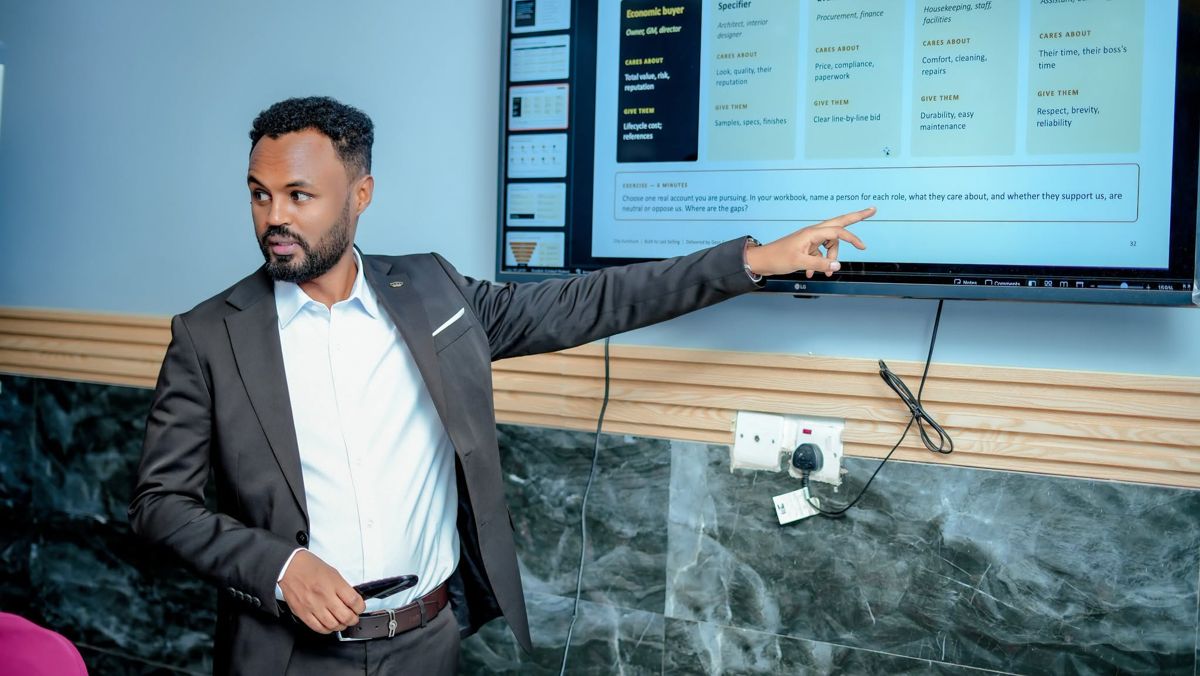
Objections are predictable, so responses can be rehearsed. Role-play is the most effective way we know to build that confidence before it is needed with a real customer.
Measure what changes
Track average sale value, discount levels and conversion rate before and after training. If value selling is working, discounts fall while conversion holds.
AI & Technology
Five questions to answer before your organisation adopts AI
By Jama Dafac · October 2026
AI tools are now cheap and easy to try. Getting real value from them depends on decisions that have little to do with technology.
Most organisations do not fail with AI because the tools are weak. They fail because nobody decided what problem the tool should solve, who owns it, or how success will be measured. Answer these five questions first.
Which decision or task are we improving? Name one process: drafting proposals, answering customer enquiries, summarising reports. Vague goals produce vague results.
What does good look like today? Record how long the task takes and how often it goes wrong now, so you can see whether AI helps.
What data will the tool see? Decide what information may and may not be shared with external AI services, especially client, staff and financial data.
Who checks the output? AI drafts; people decide. Assign a reviewer for anything that reaches a customer, donor or official.
How will staff learn to use it well? Short, practical training on prompting, checking and safe use does more than a long policy document.
Start with one pilot, measure it for a month, and expand only what clearly works.
NGO & Development
Monitoring that leads to learning: making MEAL useful for programme teams
By Jama Dafac · October 2026
Many monitoring systems collect data for donor reports and little else. A few design choices can make MEAL a management tool.
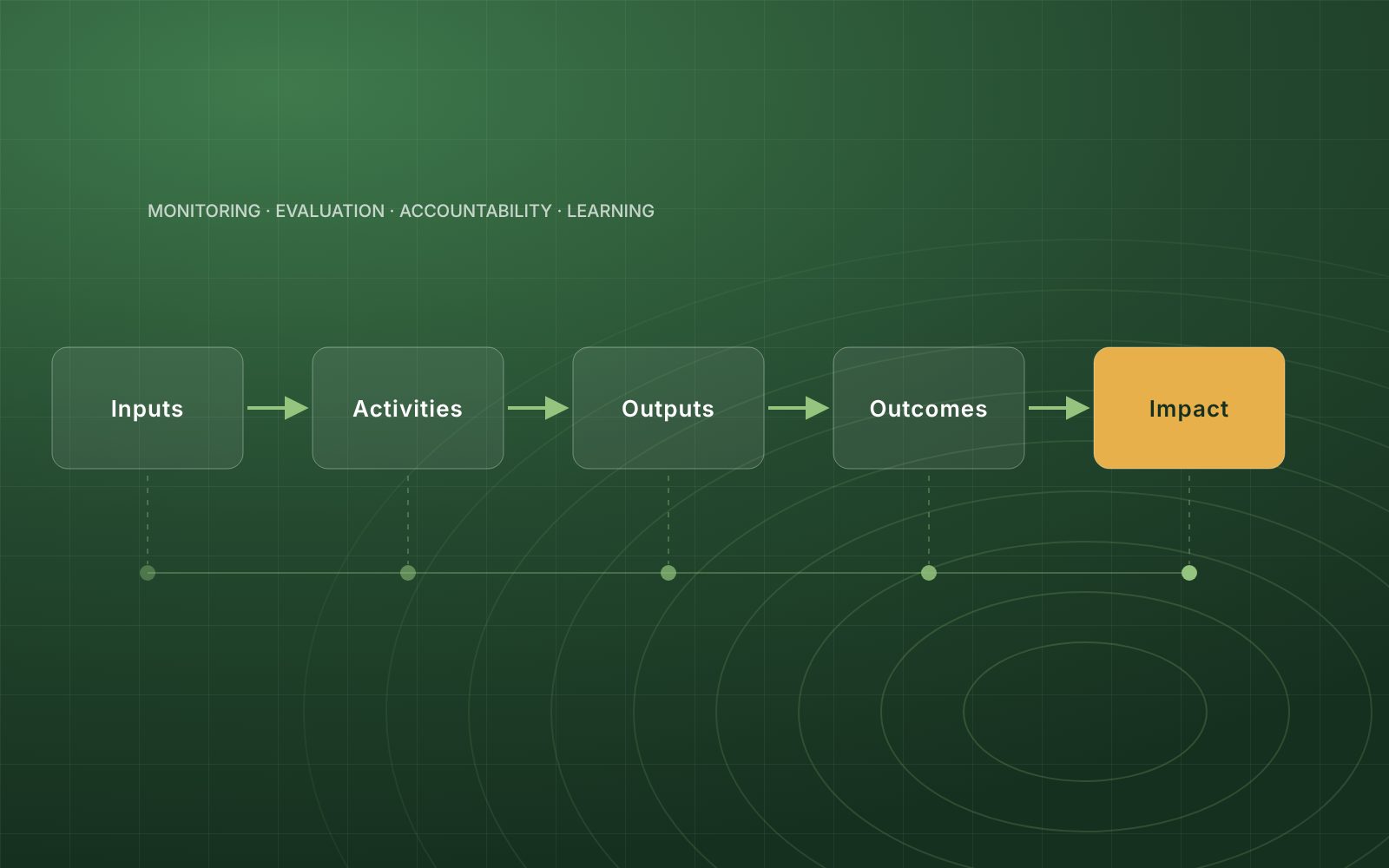
Monitoring, Evaluation, Accountability and Learning (MEAL) is often treated as a reporting obligation. Indicators are chosen to satisfy a logframe, data is gathered at the end of each quarter, and the findings rarely change what the team does next.
Fewer, better indicators
Choose the small set of indicators that programme managers will actually use to make decisions, and drop those that exist only because a template asked for them.
Build feedback into the calendar
Hold a short learning review each month or quarter where the team looks at the data together and agrees one or two adjustments.
Close the loop with communities
Accountability means telling people what was heard and what changed as a result. A simple, visible feedback channel builds trust and improves data quality.
Plan the evaluation at the start
Baseline data, comparison points and evaluation questions are far easier to set up in the design phase than to reconstruct at the end.
Commission research
Need research for a decision?
We carry out market studies, sector analyses, baseline surveys and policy research for businesses, NGOs and public institutions.
Let’s Build Better Businesses and Stronger Institutions.
Whether you are a growing business, development organisation or government institution, we are ready to help you move forward with strategic insight and practical solutions.